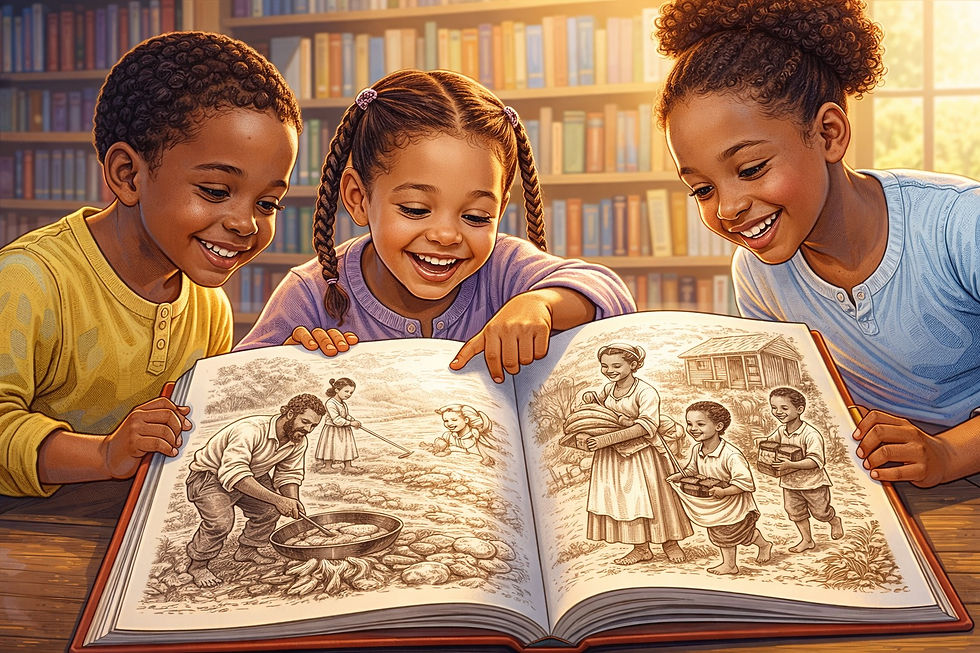
Curators: Parents Don't Just Teach... They Curate

Updated: Jan 8

Parents become librarians, editors, researchers, and quiet gatekeepers of their children’s inner worlds. Every book pulled from a shelf, every story read aloud, every documentary queued up is a deliberate choice: Does this align with our values? How will this affect our child? How will these voices shape how they see themselves and others?
That kind of curation takes time—real time. Late-night reading after the house is quiet. Pausing mid-chapter to ask, Is this right for them right now? Cross-checking authors, themes, illustrations, language, and tone. Reading things twice—once for content, once for impact. And we can't forget: searching even longer, because representation matters.
It takes sacrifice. Curating means saying no to convenience. No to default curriculums that don’t fit your child. No to fast answers. No to letting tradition or algorithms decide what your child absorbs. It means choosing slower paths, sometimes lonelier ones, because you believe your child deserves intention, not autopilot.
And it takes passion—a deep, steady belief that stories matter. That words shape empathy. That images teach belonging. That children don’t just learn facts; they absorb meaning. Homeschool parents who curate understand this instinctively. We know education isn’t neutral. It’s formative. It nurtures roots and gives wings.
This work often goes unseen. There are no gold stars for the hours spent hunting for the right books instead of the easy ones. No applause for rewriting lessons so they reflect your family’s values. But the reward shows up quietly—when a child asks thoughtful questions, recognizes themselves in history, or learns to sit with complexity instead of fearing it.
To curate a child’s education is an act of love and responsibility. It says: Your mind is worth protecting. Your curiosity is worth feeding well. Your story deserves care.
And that is no small thing.