Dr. Joy DeGruy's Research Teaches Us About History, Trauma, and Children

Updated: Feb 4

Although the writing style and content are not intended for children, if it were carefully framed in an age-appropriate way and approached with adult guidance Dr. Joy DeGruy Leary book: Post Traumatic Slave Syndrome: America’s Legacy of Enduring Injury and Healing is one of the most influential books for understanding how historical trauma affects Black communities. Dr. DeGruy explains that the trauma of chattel slavery—followed by centuries of systemic racism—did not end when slavery formally ended. Instead, its psychological effects were carried forward across generations, shaping stress responses, self-esteem, emotional regulation, and interpersonal relationships within Black communities. Her theory, widely cited in discussions of racial trauma, draws from both qualitative observation and quantitative research to explain how historical harm becomes embedded not only in social systems, but in the nervous system itself.
Although Dr. DeGruy’s work does not focus specifically on movies or documentaries, her framework helps explain why repeated exposure to graphic, violent portrayals of slavery—especially without context or care—can be emotionally harmful, particularly for Black children. When young viewers are shown images of brutality, humiliation, and dehumanization without age-appropriate framing, those stories can reinforce trauma responses rather than build understanding. Instead of learning History as a complex human story, children may internalize fear, helplessness, or a distorted sense of identity before they have the developmental tools to process such material.
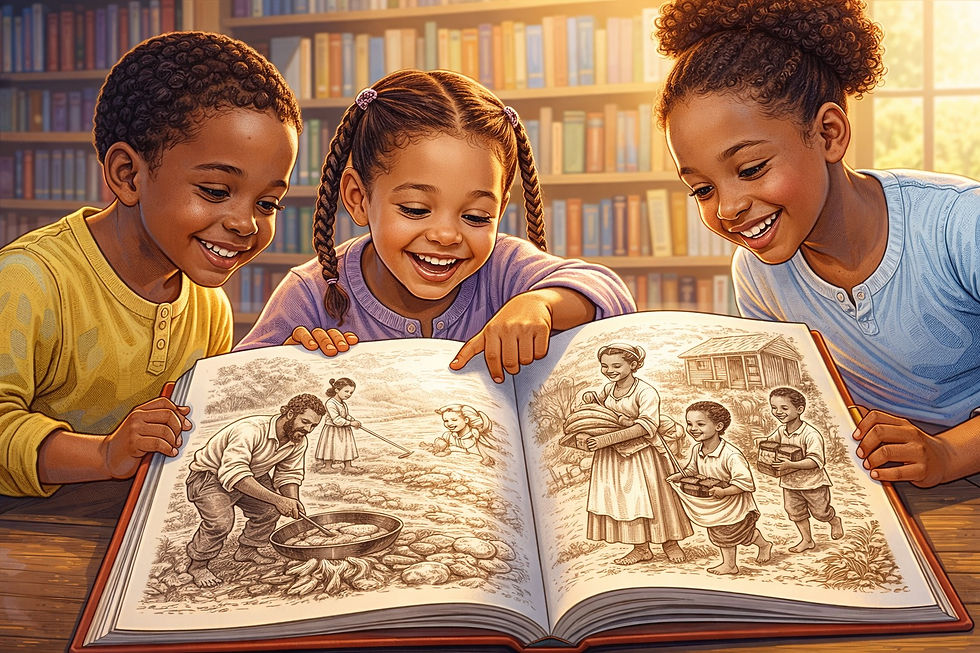
Dr. DeGruy’s research reminds us that history is not absorbed in a vacuum. The stories we tell—and how we tell them—interact with memory, emotion, and identity across generations. For children, especially, this means that education must be both truthful and trauma-informed. Teaching American Black History responsibly requires more than accuracy; it requires intention, context, and care. When History is introduced in ways that honor humanity alongside hardship, children are better equipped to develop empathy, resilience, and a grounded sense of self—rather than carrying the weight of trauma before they are ready to hold it.